
Many parents have been asking about how to safely introduce allergenic foods to their babies. This is a big and exciting milestone, and one that can also bring some understandable nerves. Fortunately, recent research has shown that early introduction of allergenic foods, such as peanuts and eggs, can actually help reduce the risk of developing food allergies later on.
Below, we’ve outlined what the latest evidence shows, and some expert tips from our colleagues at Latitude Food Allergy Care on how to get started safely when the time comes.
Why Early Introduction Matters
In the 1990s, parents were advised to delay introducing foods like peanuts and eggs. Unfortunately, this led to a rise in food allergies. That changed with the landmark LEAP Study (2015), which found that introducing peanuts between 4 and 11 months of age reduced the risk of peanut allergy by 86% compared to avoidance. More recently, new research published by the American Academy of Pediatrics (AAP) confirmed these findings on a national level for both peanut allergies and other food allergies.
Is Your Baby Ready for Solids? For Allergens?
Readiness for solids usually happens around 4–6 months. You can read our earlier blog posts on assessing readiness and checking in with your pediatrician at your 4- and 6-month visits to get the all-clear before starting. If your child has other food allergies or moderate-to-severe eczema, you may need additional guidance from your pediatrician.
Once your little one has tried a few single-ingredient foods (like pureed fruits or vegetables), it’s time to start introducing allergenic foods.
How to Start — Safely and Simply
1. Start with one new food at a time.
Introduce only one new food every 2-3 days so you can easily identify the source of any reaction.
2. Prepare the food.
Mix about 2 teaspoons of the allergenic food (like smooth peanut butter or plain yogurt) with breast milk, formula, or a familiar puree.
3. Offer a tiny taste first.
Give about ¼ teaspoon, wait 10 minutes, and observe for any reaction. If there’s none, continue feeding the rest of the portion.
4. Watch for two hours.
Some mild redness around the mouth can be irritation rather than allergy, but hives, swelling, vomiting, or trouble breathing are red flags. Call your pediatrician for any concerning reaction, and 911 for severe symptoms.
These nine foods cause the majority of allergic reactions in children: peanut, egg, milk, tree nuts, soy, wheat, fish, shellfish, sesame.
You can start with any of these once your baby is ready. A sample schedule from our colleagues at Latitude Food Allergy Care offers a plan for gradually introducing each allergen one by one.
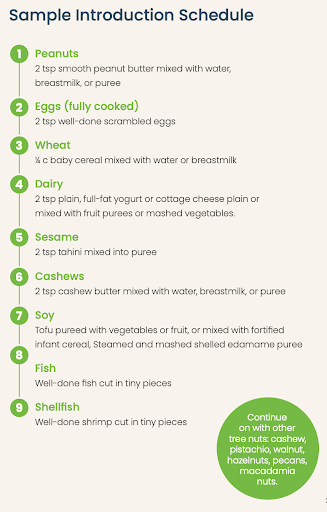
Once your baby tolerates a new food, continue offering it 2–3 times per week to help maintain tolerance.
Q&A with Latitude Allergists, Drs. Gabrielle Robertson & Megan Bannon
1. When should parents introduce allergenic foods to babies?
Most babies are ready for allergenic foods between 4 and 6 months of age, once they show signs of readiness for solids.
2. Which allergenic foods should be introduced first?
Parents can start with common allergens in their family’s diet. Peanuts, eggs, milk, and tree nuts (such as cashews) are often recommended as early priority foods.
3. How do I safely introduce allergenic foods to my baby?
Introduce one new food at a time every 2–3 days, start with a tiny amount (about ¼ teaspoon), and monitor your baby for at least two hours for any signs of a reaction before offering more.
4. What are the most common food allergens in babies and children?
The top food allergens are peanut, egg, milk, tree nuts, soy, wheat, fish, shellfish, and sesame, which account for the majority of allergic reactions in children.
5. Are allergen powders and ready-to-feed allergen products safe for babies?
Some allergen powders, pouches, and nut butters can be useful. Still, single-ingredient, real food sources are often recommended because they provide enough protein for a true introduction and make it easier to identify reactions.
6. How often should allergenic foods be given after a baby tolerates them?
Once tolerated, allergenic foods should be offered 2–5 times per week to help maintain tolerance and potentially reduce the risk of developing allergies later.
7. What are the signs of an allergic reaction in babies?
Signs can include hives, swelling of the lips or face, vomiting, coughing, wheezing, or difficulty breathing. Mild redness around the mouth can be irritation, but severe symptoms require immediate medical attention.
8. When should I see a pediatric allergist for my child?
You should see a pediatric allergist as soon as possible if you suspect a food allergy. Early evaluation can help guide safe food introductions and reduce unnecessary food avoidance.